One machine, two jobs: IMB researchers unravel PETISCO’s dual role in small RNA biogenesis and embryonic development
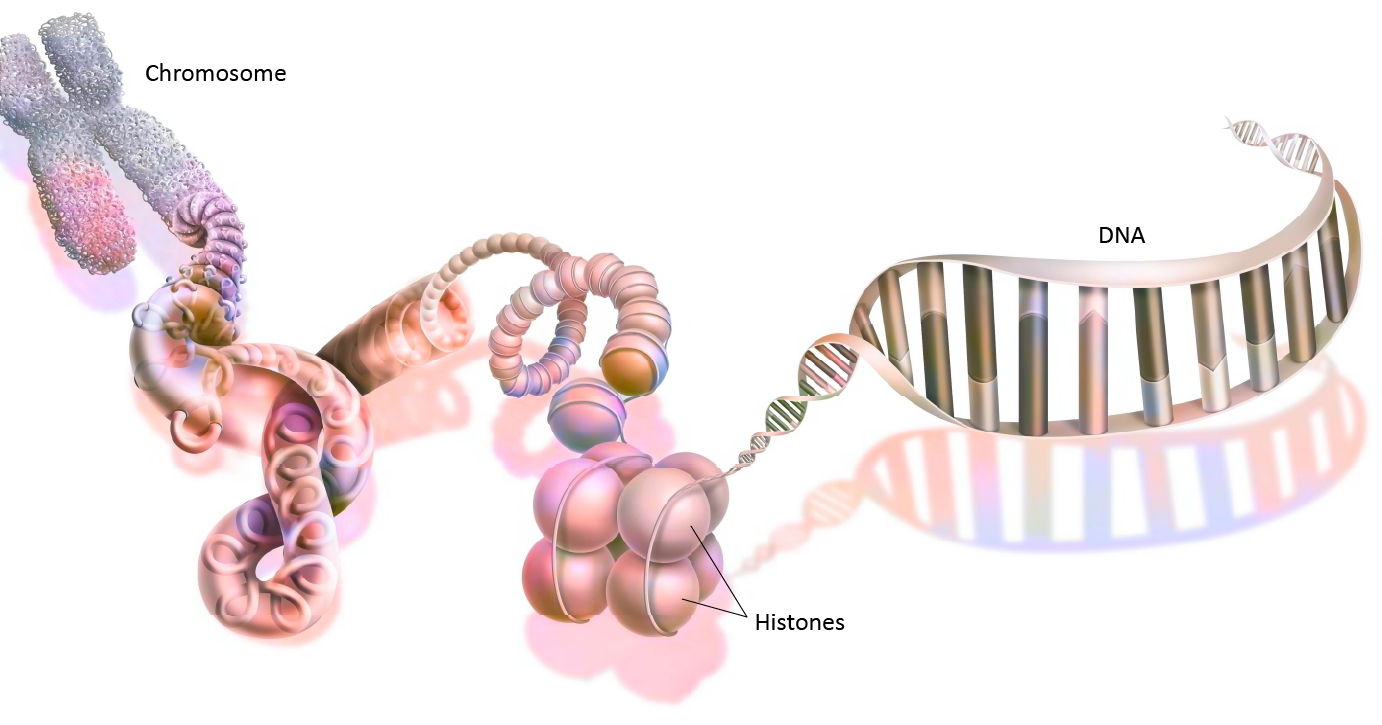
DNA is packaged around histone proteins in the cell.

Prof. René Ketting

New research from the team of Prof. René Ketting (Institute of Molecular Biology (IMB), Mainz, Germany) and their collaborators has uncovered a previously unknown mechanism that keeps histone RNAs stable in the egg, so that the new embryo can develop properly. This mechanism hinges on a protein complex called PETISCO, which is also important for stabilising piRNAs in the germline. The finding demonstrates how evolution works by repurposing existing proteins for entirely new functions, rather than building them from scratch. Their discovery was published in the journal Nature Cell Biology.
During development, an embryo’s cells need to divide and multiply rapidly to grow a whole new organism. These very first developmental steps are dependent on a molecular “care package” of proteins and RNAs deposited in the egg by the mother. Histone mRNAs are a particularly important part of this package. Histones are proteins used to compact and package DNA in the cell nucleus, and having exactly the right amount is extremely important: too many or too few and the genome will be transcribed at the wrong time. This can delay or accelerate cell divisions, causing the embryo to die.
Now, René Ketting’s team and their collaborators have discovered that a complex comprised of the proteins PETISCO and TOST-1 is responsible for ensuring this vital supply of histone mRNAs is stockpiled in the egg.
PETISCO/TOST-1 stabilises histone RNAs for proper developmental timing
Using a combination of mutagenesis and high-resolution microscopy to visualise histone mRNAs in oocytes and embryos of the roundworm Caenorhabditis elegans, the researchers found that PETISCO/TOST-1 is essential for preventing histone RNAs from being degraded by the cell’s mRNA degradation pathway, so that they can accumulate. Without PETISCO/TOST-1, the histone mRNAs are rapidly degraded, and the embryos failed to develop.
RNA sequencing of embryos with TOST-1 mutations revealed premature activation of many genes associated with late embryonic development. This aligned with the known importance of histones for developmental timing. The embryos also had frequent chromosome segregation defects, indicating that genetic material was not being divided evenly between daughter cells.
PETISCO/TOST-1 regulates RNAs by binding a conserved sequence in the stem-loop region
Next, the team wanted to know exactly how PETISCO/TOST-1 regulates histone RNAs. Using a method called iCLIP to sequence all the RNAs bound by PETISCO/TOST-1, the researchers could show that it specifically binds to a conserved sequence that is present on all replication-dependent histone mRNAs, just upstream of a stem-loop structure at the 3’ end.
“I hesitated before starting the iCLIP, because I knew it would be demanding. But after many rounds of optimisation, when the results finally came, I could not believe how clear and beautiful they were. PETISCO’s specificity for the histone mRNAs was better than anything I had imagined.”
- Joana Costa Pereirinha, first author and PhD student in the Ketting lab
In other species, this stem-loop is always bound by a protein called SLBP (stem-loop binding protein), which regulates the histone mRNA’s complete lifecycle. The results reveal that PETISCO/TOST-1 is a new mechanism for regulating histone RNA degradation that operates entirely independently of SLBP and is exclusively dedicated to the regulation of maternally provided histone mRNAs.
Evolution of new pathways by repurposing existing proteins
A particularly interesting outcome of this study is that it reveals how proteins can be adopted for new functions in evolution. René and his team had previously shown that PETISCO can bind a different protein partner called PID-1 instead of TOST-1. The PETISCO/PID-1 complex had a completely different function: it stabilises piRNAs, which are small regulatory RNAs that protect the genome against transposable elements in the germline. The researchers speculate that PETISCO was repurposed from regulating histone mRNAs into a building block for the piRNA pathway.
“It was very gratifying to resolve the puzzle of PETISCO’s function. Thus far, piRNA pathway components have never affected viability, so we were absolutely confused when PETISCO mutants exhibited embryonic lethality. Now, knowing its function, it all makes perfect sense, showcasing how nature never stops surprising you.”
- Prof. René Ketting, Scientific Director, IMB Mainz
Although some aspects of these findings are specific to C. elegans, the work is more broadly significant because it shows for the first time that histone mRNAs need not always be bound by SLBP. Moreover, it provides a concrete example of how evolution works on the molecular level by repurposing existing proteins for new functions, rather than evolving new proteins from scratch.
Further details
Read the full paper here: https://www.doi.org/10.1038/s41556-026-02141-1
René Ketting is a Scientific Director at the Institute of Molecular Biology (IMB) and a Professor of Biology at Johannes Gutenberg University Mainz. Further information about research in the Ketting lab can be found at www.imb.de/ketting.
This study was funded by the German Research Foundation (Deutsche Forschungsgemeinschaft, DFG) as part of the Research Training Group GenEvo and Transregio 319 RMaP, and by the Austrian Science Fund.
About the Institute of Molecular Biology gGmbH
The Institute of Molecular Biology gGmbH (IMB) is a centre of excellence in the life sciences that was established in 2011 on the campus of Johannes Gutenberg University Mainz (JGU). Research at IMB focuses on the cutting-edge fields of epigenetics, genome stability, ageing and RNA biology. The institute is a prime example of successful collaboration between a private foundation and government: The Boehringer Ingelheim Foundation has committed 154 million euros to be disbursed from 2009 until 2027 to cover the operating costs of research at IMB. The State of Rhineland-Palatinate has provided approximately 50 million euros for the construction of a state-of-the-art building and is giving a further 52 million in core funding from 2020 until 2027. For more information about IMB, please visit: www.imb.de.
Boehringer Ingelheim Foundation
The Boehringer Ingelheim Foundation is an independent, non-profit organization that is committed to promoting the medical, biological, chemical, and pharmaceutical sciences. It was established in 1977 by Hubertus Liebrecht (1931–1991), a member of the shareholder family of the Boehringer Ingelheim company. Through its funding programmes Exploration Grants, Plus 3, and Rise up!, the Foundation supports excellent scientists during critical stages of their careers. It also endows the prestigious Heinrich Wieland Prize and awards for emerging scientists. Additionally, it funds institutional projects combining AI and biomedicine, such as the AITHYRA institute in Vienna and a new research unit at the Center for Systems Biology in Dresden (BioAI Dresden). Other supported institutions include the Institute of Molecular Biology (IMB) in Mainz and the European Molecular Biology Laboratory (EMBL) in Heidelberg, both in Germany.
Press contact for further information
Dr Ralf Dahm, Director of Scientific Management
Institute of Molecular Biology gGmbH (IMB), Ackermannweg 4, 55128 Mainz, Germany
Phone: +49 (0) 6131 39 21455, Email: press(at)imb.de